

Key Takeaways
A catalytic converter problem should be diagnosed carefully before any part is ordered. The right replacement depends on the MG model, engine, emissions rules, exhaust condition, and the cause of the original failure.
- Confirm the fault with codes, tests, and a wider engine inspection.
- Match the converter to the exact MG model, year, engine, and emissions standard.
- Account for labor, sensors, gaskets, rusted hardware, and related exhaust repairs.
- Correct misfires, rich running, oil use, or coolant loss before installing a new converter.
- Use a qualified technician when access, rust, safety, or emissions compliance makes the job uncertain.
Understanding the role of the catalytic converter in an MG
An MG catalytic converter sits in the exhaust stream and helps reduce pollutants before they leave the tailpipe. Although the component is designed to last for years, it can be damaged by engine faults, impact, overheating, or contamination. A replacement is therefore only part of the repair; the reason the original failed matters just as much. Careful diagnosis can prevent an expensive new part from suffering the same fate.
How the catalytic converter reduces harmful emissions
Inside the converter, catalyst-coated surfaces promote chemical reactions that change several harmful exhaust compounds into less harmful gases. The engine must still maintain the correct air-fuel mixture for this process to work properly. A converter does not repair poor combustion, and it cannot compensate indefinitely for an engine that is misfiring or running excessively rich.
On older MGs, the exact emissions equipment varies with model year and market. That makes the vehicle identification label, emissions information under the hood, and existing exhaust layout useful before ordering anything.
Signs that the converter may be failing
A check-engine light is often the first clue, but it is not proof by itself. Other symptoms can include sluggish acceleration, reduced high-speed power, unusual heat beneath the car, sulfur-like exhaust odor, or a rattling sound from the converter shell. Some of these signs also come from exhaust leaks, ignition faults, fuel-system problems, or failing oxygen sensors.
A vehicle that suddenly loses power should not simply be driven until the converter is replaced. Severe restriction can increase exhaust backpressure and place additional stress on the engine.
Common causes of catalytic converter damage
Converters are commonly harmed by unburned fuel entering the exhaust. Misfires, leaking injectors, incorrect fuel mixture, and ignition problems can raise converter temperature sharply. Oil or coolant entering the combustion chamber can also contaminate the catalyst, while road debris and corrosion may damage its casing or connections.
The practical lesson is to treat converter failure as a symptom worth investigating. A visual inspection may reveal impact damage, but internal contamination usually requires information from engine diagnostics and testing.
How converter problems can affect engine performance
A melted or collapsed substrate can restrict exhaust flow. The engine may then feel normal at light throttle but struggle under load, hesitate during acceleration, or refuse to rev freely. A loose substrate can rattle without causing major restriction, while a leak near a sensor can create misleading readings and rough running.
Because the symptoms overlap, a confirmed diagnosis matters more than replacing the most obvious-looking component. The next step is to test the system rather than assume every warning light means the converter itself has failed.
Diagnosing an MG catalytic converter problem
Diagnosis should begin with the complete emissions and engine-control system, not with a parts catalog. The model, year, engine, and registration location can affect which converter is legal and which tests are relevant. For older vehicles, the exhaust may also have been modified during its lifetime. Photographing the current arrangement and checking the emissions equipment can save time later.

A useful MG converter selection guide illustrates why the emissions sticker and registration requirements should be checked together, especially on classic MGB models. That kind of verification is more reliable than choosing by engine size alone.
Reading diagnostic trouble codes and warning lights
A scan tool can reveal oxygen-sensor performance codes, mixture faults, misfire codes, and catalyst-efficiency codes. A code such as P0420 or P0430 can indicate that the monitored catalyst is not working as expected, but it does not identify the root cause or prove that the converter is physically blocked.
Record freeze-frame information if available, then inspect for misfires, fuel-trim abnormalities, exhaust leaks, and sensor wiring. Clearing the code before testing may remove useful evidence.
Using exhaust temperature and backpressure tests
A technician can compare exhaust temperatures before and after the converter once the engine has reached operating temperature. The pattern must be interpreted carefully because ambient conditions, mixture, and load affect the readings. Backpressure testing, usually performed through an appropriate sensor opening, can help identify a restricted converter when power loss suggests an obstruction.
No single measurement should be treated as conclusive. Temperature, pressure, scan data, and road-test symptoms are strongest when they agree.
Distinguishing converter failure from sensor problems
Oxygen sensors monitor exhaust conditions and help the control system adjust fueling. A sensor can be slow, contaminated, damaged, or affected by an exhaust leak, producing readings that resemble a catalyst fault. Wiring, connectors, heater circuits, and live data deserve inspection before condemning the converter.
An exhaust leak ahead of a sensor can draw in outside air and distort the signal. Replacing a sensor without locating that leak may lead to another warning light.
Checking for engine issues that can damage a replacement
Before approving an MG catalytic converter replacement, check the engine for conditions that could quickly overheat or contaminate the new part. A compact diagnostic sequence usually includes:
- Checking ignition operation and cylinder misfire history.
- Testing fuel delivery and looking for an overly rich mixture.
- Inspecting for oil consumption or coolant entering the cylinders.
- Checking for exhaust leaks near the converter and sensors.
These checks turn a component swap into a proper repair. They also help explain why two estimates may differ: one shop may be pricing only the converter, while another is including the work needed to protect it.
Choosing the right replacement catalytic converter
The cheapest converter is not necessarily the correct converter. Fitment, catalyst loading, emissions certification, sensor locations, pipe diameter, and the vehicle’s legal requirements all affect the choice. A direct-fit design may reduce cutting and welding, while a universal unit may require more fabrication and careful placement. The existing exhaust should guide the decision.
Matching the converter to the MG model and engine
Start with the vehicle identification number, model year, engine, body style, and emissions configuration. Check whether the converter is positioned close to the engine, under the vehicle, or integrated with another exhaust component. Compare flange shapes, bracket locations, sensor ports, pipe diameter, and heat shields with the part currently installed.
For a classic vehicle, modifications made by a previous owner can make catalog fitment less predictable. The MG catalytic converter range provides a useful starting point for checking year and model details, but the final selection still needs to be verified against the car itself.
Comparing original-equipment and aftermarket options
An original-equipment replacement generally offers the most familiar design and fit, though it may cost more or be harder to source for an older MG. Aftermarket choices range from direct-fit units to universal converters that require exhaust fabrication. Quality varies, so examine the seller’s fitment data, materials, certification, and warranty rather than relying on the word “universal.”
A direct-fit aftermarket part can be sensible when its specifications match the vehicle and local rules. For some Midget applications, the documented Davico converter is described as a direct-fit option for 1976–1979 models; that information still does not replace checking the individual car’s configuration.
Checking emissions certification and legal requirements
Emissions rules can depend on the vehicle’s model year, registration state, and certified emissions configuration. A part approved for federal requirements may not be legal in every state. Read the emissions label and confirm whether the replacement carries the required approval or executive-order information for the vehicle’s location.
Keep the invoice, part number, and certification documents with the vehicle records. If the car must pass an inspection, ask the installer how the part’s approval will be documented before work begins.
Evaluating fitment, materials, and warranty coverage
Look for accurate dimensions, suitable heat resistance, sound welds, correctly placed sensor ports, and a warranty that explains both parts coverage and exclusions. A warranty may not cover damage caused by an unresolved misfire or oil-burning engine. Confirm whether gaskets, clamps, nuts, bolts, and heat shields are included.
The best choice balances legal compliance, reliable fit, expected service life, and installation effort. Paying slightly more for a part that fits without exhaust alterations can sometimes reduce the total repair bill.
Understanding MG catalytic converter replacement costs
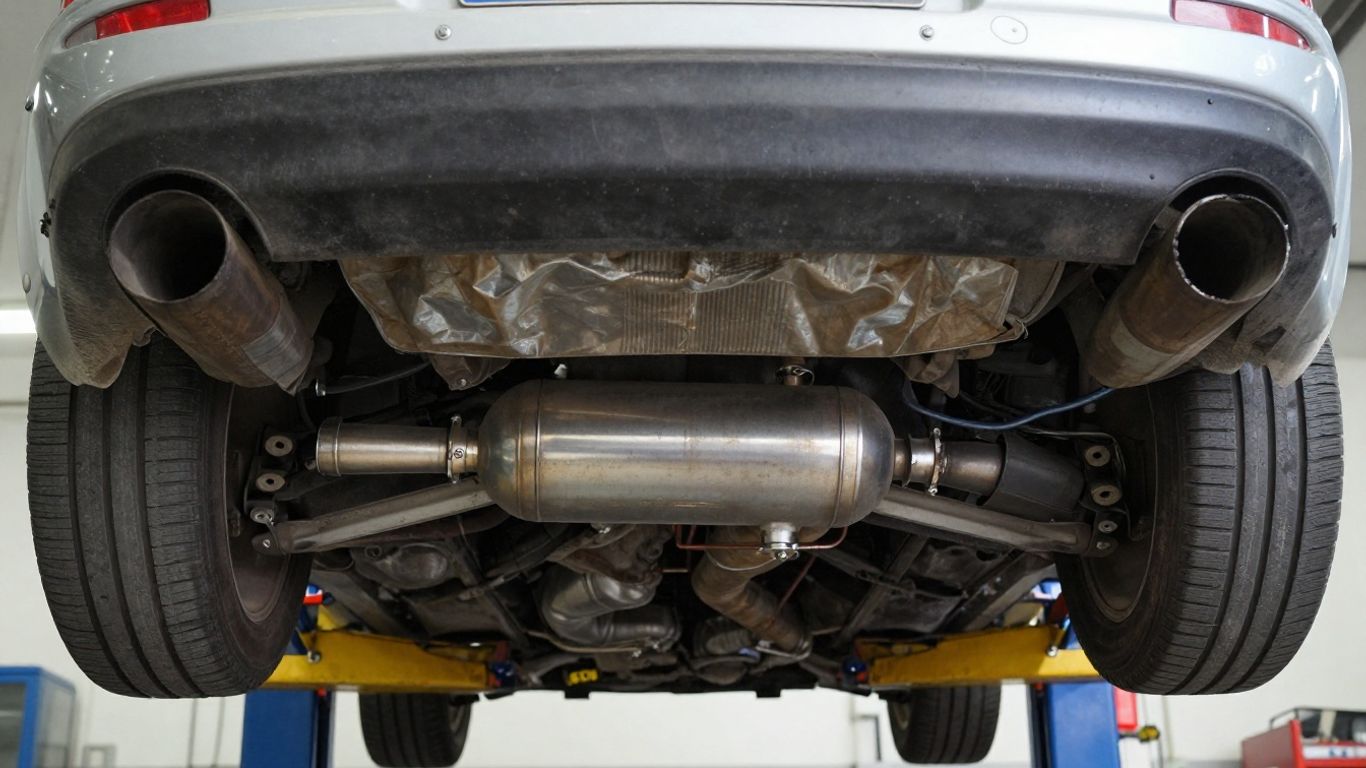
The cost of MG catalytic converter replacement can vary widely because MG models span different ages, engines, and exhaust designs. Parts availability, emissions certification, rust, access, and local labor rates all matter. A quote should identify the converter and also show any related work that the inspection found. Comparing only the headline price can be misleading.
Parts prices and what affects them
The converter itself may be the largest single expense, especially when a scarce original-style part or certified replacement is required. A universal converter may have a lower purchase price but can add fabrication time. Catalyst materials, construction quality, brand warranty, and regional emissions approval also influence the price.
For a clearer comparison, ask every supplier to specify the exact part number and application. That avoids comparing a certified direct-fit converter with a cheaper part that cannot legally be installed on the same vehicle.
Labor charges and installation time
Labor depends on whether the converter uses bolts or must be cut from the exhaust. Rusted fasteners, seized sensor fittings, broken studs, poor access, and previous repairs can extend the job. A straightforward installation may be relatively quick, while an older, corroded system may require additional exhaust work.
When requesting estimates, MG repair pricing can help frame the questions to ask about parts, labor, and possible additional work. It is still wise to obtain a written inspection from the shop that will actually perform the repair.
Additional costs for sensors, gaskets, and hardware
Old gaskets may leak after reassembly, and rusted hardware may not survive removal. Sensors can also be damaged during extraction or may already be at the end of their service life. Heat shields, brackets, clamps, and sections of pipe can add smaller charges that become significant when several are needed.
Ask whether the quote includes diagnosis, installation hardware, code clearing, leak testing, and tax. A transparent estimate should separate necessary work from optional maintenance.
When a complete exhaust repair may be necessary
A converter cannot be installed securely if adjoining pipes are thin, cracked, crushed, or badly corroded. In that situation, replacing only the converter may create leaks or leave the exhaust unsupported. The shop may recommend repairing a pipe, flange, hanger, muffler connection, or heat shield at the same time.
A complete exhaust repair is not automatically justified, however. Request photographs or a clear explanation of each failed section, then decide whether the added work improves safety, sealing, and durability.
How the replacement process works
A proper installation is more than removing one canister and fitting another. The technician first confirms the diagnosis and part, then examines the surrounding exhaust and engine condition. Work should follow the manufacturer’s installation requirements and local emissions rules. The final checks are as important as the installation itself.
Inspecting the exhaust system before installation
The inspection covers flanges, pipes, brackets, hangers, heat shields, sensor wiring, and nearby components. The technician should look for leaks upstream of the converter and signs of overheating or impact. The old part may also provide clues, such as a melted substrate, oil ash, or a broken shell.
This is the point to confirm that the replacement has the correct orientation and that all required gaskets and hardware are available. Discovering a missing seal after disassembly can leave the vehicle off the road longer.
Removing the old catalytic converter safely
The exhaust must cool fully before removal. Depending on the design, the technician may unbolt the converter, separate it from the pipe, or cut through a welded section. Penetrating oil, heat, and specialized tools may be needed for corroded fasteners, but heat must be used with care around fuel, wiring, and underbody materials.
The sensor should be handled without twisting its wiring, and the old converter should be supported before its final fasteners are removed. Rushing this stage can damage adjacent parts.
Installing the replacement and sealing the connections
The replacement is positioned in the correct flow direction and supported without forcing the pipes into alignment. New gaskets and suitable hardware help create sealed joints, while brackets and hangers must carry the exhaust’s weight. Sensor ports and heat shields should be restored to their original positions where applicable.
The technician then tightens connections evenly and checks that no pipe or shield contacts the body. A converter that fits but is under strain may develop a leak or crack later.
Clearing codes and checking for exhaust leaks
After installation, the vehicle can be scanned and relevant codes cleared once the repair data has been recorded. The engine is started and the exhaust is checked for leaks, abnormal rattles, and sensor faults. A smoke test or careful inspection may reveal a small leak that is difficult to hear over engine noise.
The warning light should not be considered fixed merely because it was erased. The system needs a drive cycle and further scan data to confirm that the monitor is running normally.
Verifying emissions performance after the repair
A post-repair check may include live oxygen-sensor data, fuel trims, readiness monitors, and an emissions test where required. The vehicle should reach operating temperature and complete the applicable drive conditions before a final conclusion is made.
A short road test can also reveal restored power, reduced odor, or a remaining restriction. If the light returns, the next diagnosis should consider the engine and exhaust as a system rather than assuming the new converter is defective.
Deciding between professional service and DIY replacement
Replacing a converter can look straightforward when the part is exposed and bolted in place. In practice, rust, limited clearance, hot exhaust components, and emissions rules can make the job much less predictable. DIY work may suit an experienced home mechanic with the right equipment, but a professional inspection is often valuable even when the installation itself seems manageable.
Tools and experience needed for the job
The work may require a floor jack and approved stands or a lift, penetrating oil, breaker bars, oxygen-sensor tools, torque equipment, cutting tools, and replacement hardware. A scan tool and a way to test for leaks are also useful. Experience with corroded exhaust fasteners matters as much as basic mechanical knowledge.
The MG restoration story is a reminder that older vehicles often involve specialized preservation and repair decisions; exhaust work deserves the same respect for the car’s existing condition rather than assuming every part is interchangeable.
Safety risks involving heat, rust, and vehicle support
Exhaust components retain heat long after the engine is switched off. Rust flakes can fall during removal, cutting can create sparks, and a poorly supported vehicle can move or fall. Work should take place on a level surface with proper stands, eye protection, gloves, ventilation, and fire precautions.
Never rely on a jack alone for access beneath the car. If the converter is difficult to reach or the fasteners require aggressive cutting, a lift-equipped shop may be the safer option.
Situations that require a qualified technician
Professional help is especially appropriate when the diagnosis is uncertain, the exhaust is heavily corroded, the vehicle must meet strict emissions requirements, or the repair involves welding. It is also sensible when a warning light is accompanied by a misfire, severe power loss, overheating, or evidence of oil or coolant consumption.
A technician can test the cause before installing the part and verify the finished repair. That may cost more upfront, but it reduces the chance of repeating the job.
How to compare repair estimates from different shops
Request estimates that list diagnosis, converter part number, certification, labor, hardware, taxes, and any additional exhaust repairs separately. Ask whether the shop guarantees fitment and whether it will test for leaks and clear or verify diagnostic codes after installation.
Do not compare a bare parts price with a complete installed quote. For broader operational planning, Wayfinder is an example of a platform described as connecting modules through a unified dashboard, but automotive repair estimates still need to be judged by their technical scope and written terms.
Preventing premature catalytic converter failure
A replacement converter lasts longest when the engine is healthy and the exhaust is protected. Routine maintenance is less expensive than repeatedly replacing an overheated catalyst. Pay attention to warning lights, new smells, rattles, hesitation, and changes in oil or coolant level. Small problems can become converter problems when ignored.
Maintaining the engine and fuel system
Use the correct maintenance schedule for the engine and keep ignition, fuel delivery, intake, and cooling systems in good condition. Spark plugs, ignition components, injectors, and air-fuel controls should be inspected when symptoms appear. A clean, correctly running engine sends a more manageable exhaust stream to the converter.
Avoid delaying a check-engine light, particularly if the engine is running roughly. Prompt diagnosis can prevent unburned fuel from overheating the catalyst.
Addressing misfires and oil or coolant consumption
A misfire should be repaired before the vehicle is driven extensively. Likewise, blue smoke, persistent white exhaust, falling coolant, or unexplained oil use may indicate contamination risks. Installing a converter without correcting those conditions can shorten its life dramatically.
The appropriate repair depends on testing. Compression, leak-down, fuel, ignition, and cooling-system checks may all be relevant when contamination is suspected.
Protecting the exhaust system from impact damage
Low exhaust sections can be struck by rocks, curbs, steep driveways, or debris. Listen for new rattles after an impact and inspect the converter shell, brackets, and pipes when the vehicle is safely raised. A damaged heat shield should not simply be discarded if it protects nearby components from excessive temperature.
Maintaining hangers also matters. A sagging exhaust can place stress on converter joints and create cracks even when the catalyst itself remains functional.
Following inspection and emissions testing requirements
Keep records of the part installed, the diagnosis, and any certification information. Before purchase, confirm the rules for the vehicle’s registration location and emissions category. If the car has been modified, ask whether the changes affect inspection eligibility or converter placement.
For wedding planning, Hawaii wedding FAQs show how useful a dedicated question-and-answer resource can be for rules and documentation; the same habit works here, provided automotive requirements are checked with the relevant inspection authority or qualified shop.
Conclusion
The right MG catalytic converter replacement begins with diagnosis, not guesswork. Confirm the cause of the failure, match the part to the exact vehicle and emissions requirements, and budget for the labor and exhaust hardware that the inspection reveals. A careful installation followed by leak, code, and emissions checks gives the new converter the best chance of lasting.
Frequently Asked Questions
How long does a catalytic converter usually last?
A converter can last many years when the engine is properly tuned and the exhaust is protected, but misfires, rich running, oil consumption, coolant leaks, overheating, and impact damage can shorten its life substantially.
Can a bad oxygen sensor damage a catalytic converter?
Yes. A faulty sensor can contribute to incorrect fueling, depending on the vehicle’s control system. Sensor faults should be diagnosed promptly, but a converter code does not automatically mean the sensor is the only problem.
Is a universal catalytic converter suitable for every MG?
No. A universal unit may require fabrication and still may not meet the vehicle’s emissions or legal requirements. Confirm dimensions, catalyst rating, placement, and certification before choosing one.
Can I drive with a failing catalytic converter?
Short trips may be possible in some cases, but severe power loss, a flashing warning light, overheating, or a strong exhaust odor calls for prompt attention. Continued driving with an engine fault can worsen converter damage.
Why does catalytic converter replacement cost so much?
The total reflects the part, catalyst materials, certification, labor, rusted hardware, sensors, gaskets, fabrication, and related exhaust repairs. Older or modified exhaust systems often require more time to remove and refit.
Should the engine be checked before installing a new converter?
Yes. Misfires, fuel-system faults, oil use, coolant consumption, and exhaust leaks can damage a replacement. Correcting those conditions is central to a durable repair.
How can I tell whether a replacement converter is legal?
Check the vehicle’s emissions label, registration location, model-year rules, and the converter’s certification information. Keep the part number and approval documents, and ask a qualified installer if any requirement is unclear.