

Key Takeaways
A clutch replacement is a repair where the vehicle, parts selected, labor time, and any flywheel or hydraulic work all shape the final bill.
- Ask for a written, itemized estimate before authorizing repairs.
- A complete clutch kit often includes the disc, pressure plate, and release bearing.
- Flywheel condition can add meaningful cost when the transmission is already removed.
- Slipping, gear-selection trouble, vibration, and burning smells deserve prompt inspection.
- Compare warranty terms and labor coverage, not just the lowest advertised price.
MG clutch replacement cost at a glance
The phrase MG clutch replacement cost covers more than the price of a clutch kit. Labor can be a large part of the total because the transmission usually has to be separated from the engine. Taxes, shop rates, access to parts, and the condition of related components can move the estimate in either direction.
Typical price ranges by MG model
There is no single price that applies to every MG. An older MGB, a compact MG ZS, and an MG6 may use different parts and require different amounts of labor, while local pricing also varies by region. For a model-specific starting point, MG ZS clutch kit replacement information lists a broad range of £544 to £1,245, while MG MG6 pricing data reports estimates from R2000 to R2900; these figures are reference points, not a promise of what your repair will cost.
The best estimate comes from the exact year, engine, transmission, and registration or vehicle identification details. A shop should confirm those details before ordering parts.
Parts, labor, and taxes in the total
A useful estimate separates the clutch components from removal and installation labor. It should also identify taxes, shop supplies, diagnostic time, and any possible extra work rather than hiding them inside one unexplained total. An itemized quote protects your budget because it makes differences between shops easier to understand.
The following structure is a practical way to read a quote:
| Cost area | What it may cover | Why it varies |
|---|---|---|
| Clutch parts | Disc, pressure plate, release bearing | Brand, specification, and warranty |
| Labor | Transmission removal, installation, and testing | Vehicle layout and local hourly rate |
| Flywheel work | Inspection, resurfacing, or replacement | Wear, heat damage, and machine-shop pricing |
| Related work | Seals, hydraulics, cables, or fluid | Condition found during diagnosis |
A low headline price may exclude flywheel work or taxes, so compare like for like. A fixed-price quote can be helpful when its inclusions are clearly stated; MG clutch replacement quotes describes online pricing that includes parts, labor, and GST for quoted work.
How manual and automated systems differ
A conventional manual clutch is operated by a pedal and a mechanical or hydraulic release system. Automated manual systems still use clutch components, but actuators and control equipment can add diagnostic steps and parts that are not present in a basic manual repair.
That distinction matters when asking for a quote. Confirm whether the estimate covers only the friction clutch or also actuator diagnosis, calibration, software-related procedures, or hydraulic work where applicable.
Why quotes can vary between repair shops
Two shops can inspect the same car and produce different totals without either estimate being dishonest. Their labor rates, parts sources, warranty policies, and assumptions about flywheel reuse may differ. Access to the correct parts can also affect both timing and price.
Ask each shop to state what happens if disassembly reveals additional wear. The fair installation pricing discussion is a useful reminder that labor hours, flywheel resurfacing, and the difference between DIY work and professional service can all change the final calculation.
What a clutch replacement includes
A proper replacement begins with diagnosis and ends with a road test, not simply the installation of one new disc. The technician typically removes the transmission, examines the clutch assembly and flywheel, installs suitable parts, and checks operation. The exact scope should be written down before work begins.
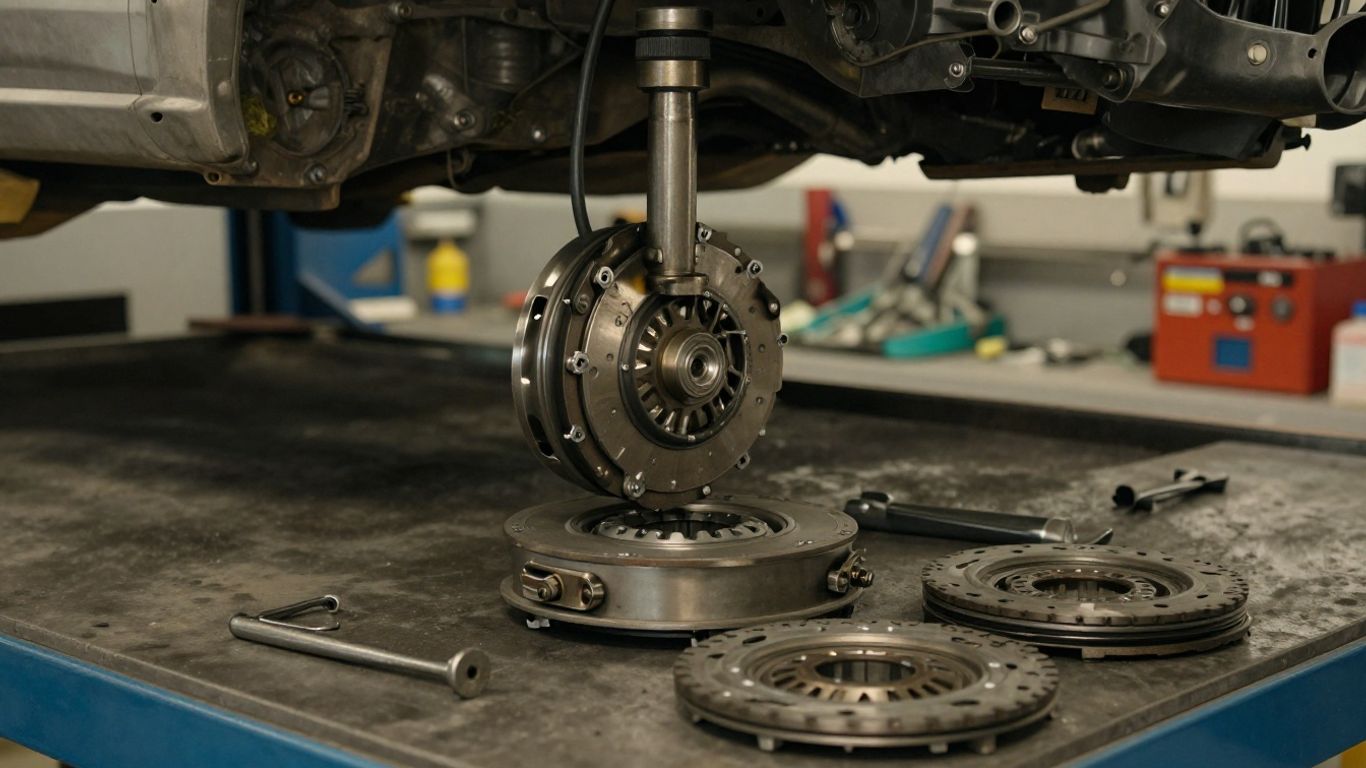
Clutch disc, pressure plate, and release bearing
Most complete clutch kits contain the friction disc, pressure plate, and release bearing. Replacing these parts together is common because they wear as a system and the labor to access them is substantial. The technician should verify that the kit matches the engine and transmission rather than relying on the model name alone.
The old parts may reveal overheating, oil contamination, uneven wear, or a release problem. Those findings can explain the symptoms and help determine whether another repair is needed.
Flywheel inspection and resurfacing
The flywheel provides the surface against which the clutch disc engages. It should be checked for grooves, hot spots, cracks, excessive wear, and the correct surface condition. Depending on its design and condition, a shop may resurface it or recommend replacement.
Skipping that inspection can shorten the life of new clutch parts. A quote should say whether flywheel machining is included, optional, or excluded unless damage is found.
Hydraulic components and clutch cables
Some clutch systems use a cable, while others use hydraulic components such as a master cylinder, slave cylinder, or connecting line. A worn cable can cause poor release, and a hydraulic fault can create symptoms that resemble a worn clutch. Replacing the friction parts alone will not correct every pedal or gear-selection problem.
A technician should check the release mechanism and look for leaks or abnormal resistance. If a hydraulic component is faulty, it may be sensible to address it while access is available, but it should appear as a separate line in the estimate.
Fluids, adjustments, and post-repair testing
Transmission fluid may need to be drained and refilled during the job, and some systems need an adjustment or bleeding procedure afterward. The technician should confirm pedal travel, engagement point, gear selection, and operation under load. A road test can catch noises or slipping before the car is returned.
Ask what post-repair checks are included. A clear answer helps distinguish a complete repair process from a parts-only installation.
Factors that affect MG clutch replacement cost
The same symptom can lead to different repair paths, and the same clutch job can take different amounts of time on different cars. Parts availability and the vehicle’s service history add further uncertainty. Cost is easiest to manage when the shop explains those variables before dismantling anything.
MG model, engine, and transmission type
Model and drivetrain details influence the clutch design, the access available to the technician, and the parts required. Engine output, transmission layout, and whether the vehicle uses a manual or automated system can all affect the work.
Provide the full vehicle details when requesting an estimate. “MG” alone is not enough to identify the correct kit or labor procedure.
Labor rates and repair complexity
Clutch replacement is labor-intensive, and hourly rates differ between independent garages, specialist workshops, and dealer service departments. Rusted fasteners, restricted access, or additional removal work can increase the time. The quoted labor allowance should be visible rather than buried in the total.
A shop that charges more per hour may still be competitive if its estimated hours, parts warranty, and scope are stronger. Compare the complete proposal instead of selecting by hourly rate alone.
Original equipment versus aftermarket parts
Original-equipment and aftermarket kits can differ in price, availability, specification, and warranty. A reputable aftermarket component may be suitable, but the shop should identify the manufacturer and explain the coverage. The cheapest unlabeled option makes it harder to assess quality or future support.
Request the part number or brand on the estimate. That simple detail gives you something concrete to compare across quotes.
Additional damage discovered during disassembly
Oil leaks, damaged seals, worn mounts, a failed release mechanism, or a flywheel that cannot be reused may only become clear after access is gained. These findings do not automatically mean the original estimate was careless. They are often hidden until the transmission is removed.
Agree on an approval process before work starts. For example, the shop can photograph the problem, provide the added price, and wait for your authorization before proceeding.
Signs your MG clutch needs replacing
Clutch symptoms often develop gradually, so drivers may adapt to them without realizing how much the car has changed. A single symptom does not prove that the clutch disc is worn; hydraulic faults, transmission problems, and engine issues can feel similar. Diagnosis is safer than replacing parts based on a guess.

Slipping under acceleration
A slipping clutch allows engine speed to rise without a matching increase in road speed, especially when accelerating uphill or in a higher gear. The problem may be easier to notice with passengers or cargo. Continued slipping creates heat and can damage the pressure plate or flywheel.
If the engine revs flare repeatedly, avoid hard acceleration and arrange an inspection. Driving gently may reduce stress temporarily, but it does not restore worn friction material.
Difficulty selecting gears
Difficulty engaging first gear or reverse can indicate that the clutch is not fully releasing. A stretched cable, air in a hydraulic system, linkage issue, or internal transmission fault can produce similar behavior. Grinding noises are a reason to stop forcing the gear lever.
Tell the technician when the problem occurs and whether the engine is running. That detail can help separate a release problem from a transmission-side fault.
Clutch judder, noise, or vibration
Judder during takeoff may come from uneven friction surfaces, contamination, damaged mounts, or a pressure plate problem. A rumbling or chirping sound that changes when the pedal is pressed can point toward a bearing or release mechanism concern. The source is not always the clutch itself.
Note whether the vibration happens when pulling away, changing gear, or simply idling. A short description of the conditions is more useful than saying only that the clutch feels bad.
Burning smells and changes in pedal feel
A burning odor after repeated slipping suggests excessive clutch heat. A pedal that suddenly becomes soft, hard, low, or unusually high may indicate a hydraulic or cable issue, while a change in engagement point can accompany wear.
Stop and seek professional advice if the pedal cannot be pressed normally or the car will not select gears. A failure that leaves the vehicle unable to move can also create a towing expense.
Repair or replace: Choosing the right solution
Not every clutch complaint requires the same repair. The right choice depends on measured wear, the condition of the flywheel, the release system, and the vehicle’s overall value. A careful diagnosis can prevent both premature replacement and false savings.
When a complete clutch kit makes sense
A complete kit is often sensible when the disc and pressure plate are worn or contaminated and the release bearing has similar service life. Since access labor is a major part of the job, replacing closely related wear components at the same time can avoid paying that labor twice.
The technician should still confirm the kit contents and compatibility. If a quote includes only a disc, ask why the pressure plate and release bearing are being retained.
Situations that require flywheel replacement
A flywheel may need replacement when it is cracked, excessively scored, beyond machining limits, or otherwise unable to provide a suitable surface. Some flywheel designs also have specific inspection requirements that make replacement preferable to resurfacing.
The decision should be based on inspection rather than a blanket rule. Ask for the measured condition and the reason the proposed option is appropriate for the vehicle.
Whether a clutch adjustment can solve the problem
Adjustment may correct free play or engagement issues on systems designed for it, particularly when a cable has stretched or the release mechanism is incorrectly set. It will not restore friction material that is worn away or repair a damaged pressure plate.
A low-cost adjustment is worth considering only after the system has been checked. If slipping remains after adjustment, continued driving can make the eventual repair more expensive.
Risks of delaying the repair
A mildly slipping clutch can deteriorate quickly under traffic, hills, towing, or repeated stop-and-go use. Heat may damage the flywheel, and a release or hydraulic fault can eventually prevent gear selection. Waiting can also leave you stranded rather than simply inconvenienced.
If symptoms are getting worse, arrange an inspection before the car becomes unreliable. Early diagnosis does not guarantee a small bill, but it gives you more choices.
How to reduce your MG clutch replacement cost
Saving money does not necessarily mean choosing the cheapest kit or postponing the work. It usually means removing uncertainty, comparing equivalent scopes, and avoiding duplicated labor. A few questions before authorization can make a noticeable difference.
Compare itemized quotes from local shops
Request at least two written estimates when the vehicle is safe to drive. Each should list parts, labor hours, taxes, flywheel assumptions, fluids, and warranty terms. If one quote is much lower, check whether it excludes likely extras.
For broader maintenance planning, information about clutch replacement costs can provide general context, although figures from another country or vehicle should not be treated as a local MG price.
Choose parts based on warranty and quality
Ask which manufacturer supplies the kit and how long the parts are covered. A slightly higher parts price may be reasonable if it includes clearer support and a better warranty. Confirm whether the warranty applies only to parts or also to the labor needed to replace a failed component.
Keep the quote and invoice together. Those documents make warranty conversations much easier later.
Ask about bundled labor and related repairs
Some work can be efficient to combine while the transmission is already removed, such as an accessible seal or a clearly faulty release component. That does not mean every suggested add-on is necessary. Ask what is urgent, what is preventative, and what can safely wait.
A reliable shop will explain the labor overlap rather than simply adding a list of parts. Approve only work that has a clear diagnosis and price.
Check maintenance coverage and repair warranties
Review any service plan, extended coverage, roadside policy, or previous repair warranty before paying out of pocket. Coverage may be limited by age, mileage, component, or authorized repairer requirements. Get confirmation in writing because verbal assumptions can be difficult to resolve.
If you are comparing a dealership with an independent shop, compare warranty duration and exclusions alongside the total price. The lowest initial figure may not be the lowest ownership cost.
How to choose an MG clutch replacement shop
A clutch job requires correct parts, safe transmission removal, and careful reassembly. The shop does not have to be the most expensive option, but it should be able to explain its process and stand behind the work. Reviews can help with first impressions, while GBP review management offers broader guidance on how local service reputations are built and maintained.
Experience with MG models and transmissions
Ask whether the technicians have worked on your MG model and transmission type recently. Experience should include diagnosis, not just fitting parts, because clutch symptoms can originate in hydraulic, cable, mounting, or transmission components.
You can also ask how the shop verifies part compatibility and whether it follows a documented post-repair test. Specific answers are more reassuring than a general claim of expertise.
Questions to ask before authorizing work
Before signing, ask what parts are included, whether the flywheel will be inspected, and how additional damage will be handled. Also ask how long the repair is expected to take and whether the vehicle will receive a road test.
A short checklist can keep the conversation focused:
- What exact parts and brands are included?
- Is flywheel machining or replacement included or conditional?
- What labor and taxes are included in the total?
- What warranty covers parts and labor?
The answers should match the written estimate. If they do not, pause until the differences are resolved.
Warranty coverage for parts and labor
A warranty should state its duration, covered components, exclusions, and whether labor is included. Some policies require the original shop to perform any warranty work, while others limit coverage if another fault caused the failure.
Read the conditions before authorizing the repair. A longer warranty is useful only when its terms are practical and clearly explained.
What a reliable written estimate should include
A dependable estimate identifies the vehicle, repair scope, parts, labor, taxes, expected completion time, and approval threshold for extra work. It should distinguish confirmed repairs from conditional recommendations. It should also name the warranty provider or shop policy.
If you are researching unrelated service resources while organizing a broader project, pages about a Sol scanner, vehicle ownership records, hearing aid maintenance, or Clay County fishing are separate topics and should not be confused with automotive repair guidance. For this repair, keep the estimate centered on the MG and its clutch system.
Conclusion
MG clutch replacement cost is best understood as a range shaped by the exact vehicle, labor access, parts quality, flywheel condition, and warranty. Get the symptoms diagnosed, compare itemized estimates, and make sure any additional work is approved before it begins. That approach cannot remove every surprise, but it can make the repair easier to budget and easier to judge.
Frequently Asked Questions
How long does an MG clutch replacement take?
The time varies by model, transmission layout, shop procedure, and any seized fasteners or related repairs. A written estimate should provide an expected completion window rather than an unqualified promise.
What is usually included in a clutch replacement?
A typical job includes removal and installation labor plus a clutch disc, pressure plate, and release bearing. Flywheel work, hydraulics, cables, fluids, and taxes may be included or charged separately, so check the estimate.
Should the flywheel always be resurfaced?
No. The flywheel should be inspected and then resurfaced or replaced only when its condition and design make that appropriate. The shop should explain the recommendation and its price.
Can a clutch be repaired instead of replaced?
An adjustment or hydraulic repair may solve a release problem, but worn friction material and damaged clutch components generally require replacement. Diagnosis is needed before choosing between those options.
Is a slipping clutch safe to drive?
It may remain driveable briefly, but slipping can worsen and create heat or loss of power transmission. Avoid heavy loads and arrange an inspection promptly, especially if gear selection or pedal operation is also changing.
How can I compare clutch replacement quotes?
Compare the exact parts, labor hours, taxes, flywheel assumptions, related repairs, completion time, and warranty. A lower total is meaningful only when the scope is equivalent.
Does a clutch replacement come with a warranty?
Many shops and parts suppliers offer some form of warranty, but coverage varies. Confirm the duration, exclusions, and whether both replacement parts and labor are covered before authorizing work.