

Key Takeaways
A remote-road trip is safer when the vehicle, route, supplies, and contingency plan all suit the conditions. Take time to check each one before setting off.
- Match the MG and its load to the actual road surface and any restricted sections.
- Check closures, weather, fuel availability, daylight, and local advice before departure.
- Service the vehicle and make sure the spare tire and repair equipment are usable.
- Carry enough water, food, fuel margin, navigation, and communication equipment for delays.
- Drive to the conditions, and know what you will do if the trip is interrupted.
Assess whether your MG is suited to the route
An MG may be suitable for some outback journeys and unsuitable for others; the route matters as much as the badge on the vehicle. Before committing, look beyond the map’s distance and find out what the road is actually like, including unsealed stretches, deep sand, corrugations, and seasonal closures. The useful question is whether your particular vehicle, in its current condition and carrying its planned load, can manage every section safely.
Check ground clearance, tires, and underbody protection
Start with the lowest points beneath the vehicle: a road that looks passable can still have ruts or rocks that catch the underbody. Check the tires’ condition and pressure recommendations in the owner’s manual, and consider whether the tread and tire type are appropriate for the surfaces you expect. If you are unsure whether a vulnerable component has adequate protection, ask a qualified mechanic to inspect it rather than assuming a protective plate is fitted.
Compare your vehicle’s capabilities with the road conditions
Road descriptions should be specific enough to compare with your vehicle: sealed, maintained gravel, rough corrugations, loose sand, and rocky tracks are not interchangeable. Check the vehicle manual for operating limits, load guidance, and any cautions about water crossings or unsealed roads. This simple comparison can help frame the decision; it is not a substitute for checking the road or your vehicle in person.
| Road condition | What to check | Practical decision |
|---|---|---|
| Sealed highway | Roadworks, distance between services, and daylight | Confirm stops and allow for breaks |
| Maintained gravel | Surface condition, tire suitability, and dust | Reduce speed and reassess as conditions change |
| Deep sand or rough tracks | Clearance, traction, and any access restrictions | Do not proceed if the vehicle or route is unsuitable |
| Floodway or water crossing | Current depth, flow, and official closure advice | Turn back if the crossing is unsafe or uncertain |
Use the table as a prompt for more specific research, not as a rating of any MG model. A section described as rough or sandy may call for a different vehicle, or a revised route, even if most of the trip is straightforward.
Identify sections that may require a 4WD vehicle
Some tracks and access roads are explicitly limited to four-wheel-drive vehicles or require high clearance, and those restrictions should settle the question. Confirm the route with current local sources, especially where a road branches onto a station track, a park access road, or a remote shortcut. If a route includes a section your MG is not suited to, choose an alternate route rather than relying on momentum or a more favorable forecast.
Consider passenger, luggage, and towing weight
Passengers, luggage, roof loads, and a trailer all affect handling and braking. Check the vehicle’s load limits in its manual and make sure the combined weight is within them; also account for how cargo is distributed. A fully loaded car can behave differently from the lightly loaded vehicle you drive around town, so keep heavy items low and secure.
Plan the route and timing
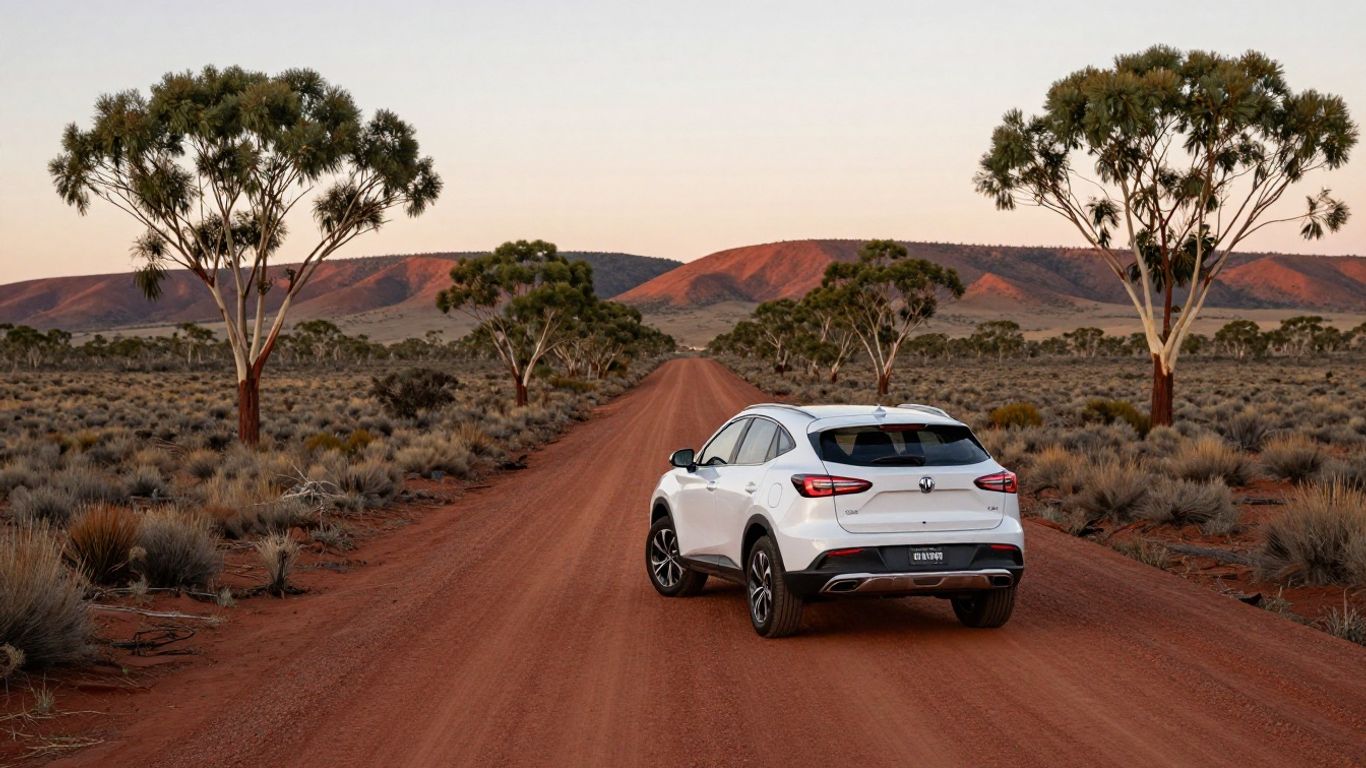
Outback route planning is more than choosing a line between two towns: services can be far apart, and conditions can change during a trip. Confirm that each leg is practical for the vehicle, the people aboard, and the available daylight. A route plan should include alternatives, not just the most direct option.
Research road closures, fuel stops, and services
Check official road and park notices before departure and again close to the day you leave. Mark fuel stops, opening hours, and any locations where food, water, or help may be available; do not assume a service is open just because it appears on a map. Online reviews, including Google Maps, can provide general context about businesses, but they are not a substitute for current road-closure or fuel-availability information.
When a community stop is part of your plans, confirm that it is open before making it a fixed point in the day. A regional museum visit, for example, may need a little advance checking; the work of regional museum advisors offers a glimpse of the people and local institutions found in regional communities. Keep sightseeing flexible so that a late start or changing conditions do not pressure you to drive after dark.
Check weather, road reports, and seasonal conditions
A dry forecast at your starting point says little about a remote section several hours away. Read road reports for the whole route, look for recent rain and heat warnings, and check whether seasonal conditions have led to restrictions. If a road is closed or the advice is unclear, do not treat a map route as permission to continue.
Estimate driving times and daylight hours
Navigation estimates rarely account for every stop, rough section, roadwork, or wildlife encounter. Plan a conservative day with time for breaks and unexpected delays, and aim to reach your destination well before dark. If your schedule only works when everything goes perfectly, shorten the day or add an overnight stop.
Share your itinerary and check-in plan
Give someone reliable your route, planned stops, and expected arrival times. Agree on when you will check in and what they should do if they do not hear from you, including who to contact and when. Tell them promptly if your plans change; a check-in arrangement is useful only when it reflects where you actually are.
Prepare the vehicle before departure
A remote trip is a poor time to discover a neglected service item or an old tire. Have the vehicle checked early enough to allow repairs and a follow-up drive before departure. Keep records of the work and make sure the person servicing the car knows the kind of roads you plan to travel.
Arrange a service and address warning lights
Book a service with a qualified mechanic and describe the distance, surface types, and expected load. Do not ignore a warning light because the car seems to drive normally; ask a professional to diagnose it and resolve any safety-related issue before leaving. If the repair cannot be completed in time, changing the trip plan is safer than hoping the warning will not matter.
Inspect tires, brakes, battery, and fluid levels
Ask for a careful check of tire condition, brakes, battery health, and fluid levels. Look for cracks, uneven wear, leaks, or other changes that merit attention, and check the manual for the correct fluids and tire pressures. A short check before each day’s drive can also reveal a problem before it becomes harder to address.
Confirm the spare tire and repair equipment are usable
Check that the spare is present, properly inflated, and compatible with the vehicle. Make sure you know how to use the jack and wheel tools, and verify that any puncture-repair equipment is intact and suitable for your tires. If you have never changed a wheel, practice somewhere safe before the trip rather than learning on an exposed roadside.
Pack essential tools and vehicle documents
Pack the tools recommended for your vehicle and make sure they are accessible, not buried under luggage. Carry your registration and insurance details, the owner’s manual, and service or roadside-assistance information. Australia’s trusted Car Parts Supplier connects customers with quality used, genuine, and aftermarket parts through a nationwide network; that is a parts-supply resource, not a substitute for a pre-trip mechanical inspection.
Carry supplies for remote travel
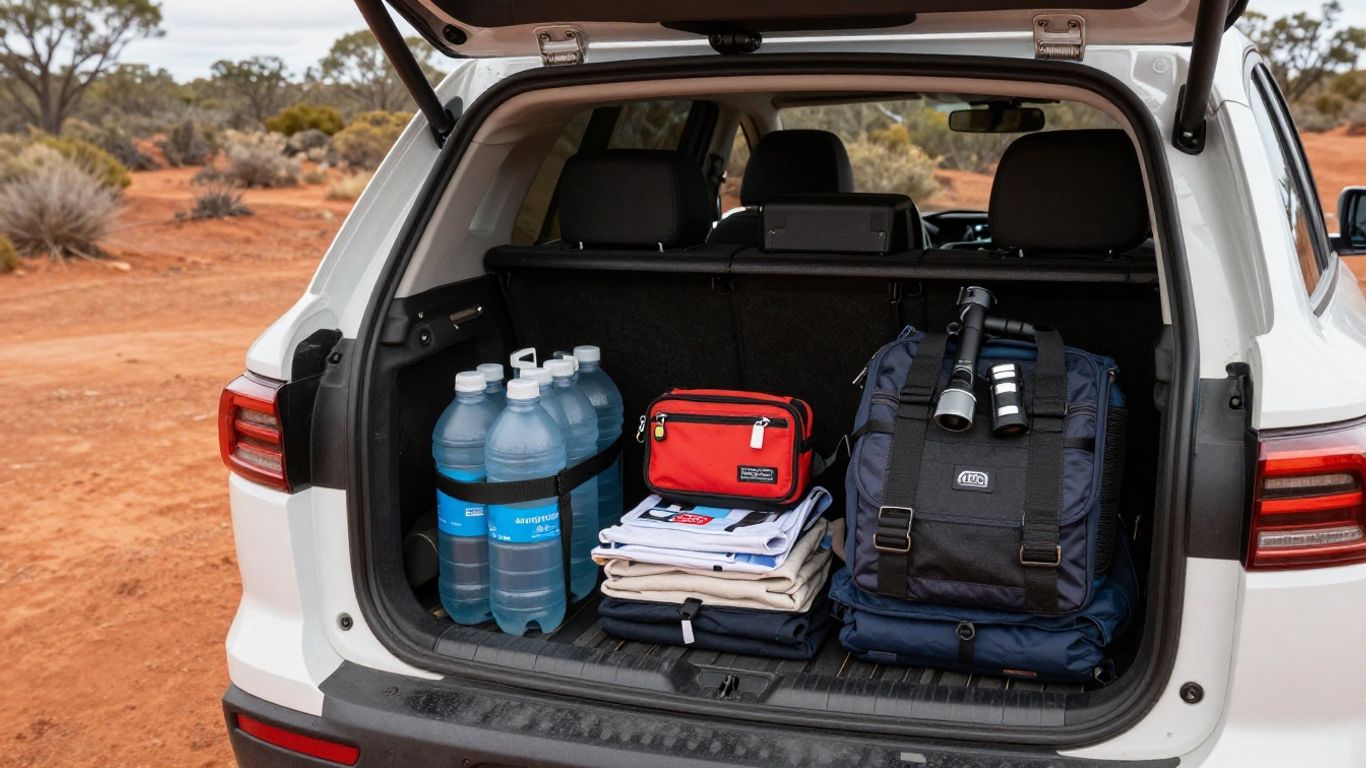
Remote travel asks you to carry enough to manage a delay without making the vehicle dangerously heavy or cluttered. Plan for the people in the car, the distance between services, and the possibility that a road closure or breakdown changes your schedule. Keep essentials within reach and secure everything else so it cannot shift under braking.
Calculate fuel needs and identify backup stops
Estimate fuel use for the full route, allowing for detours, rough surfaces, and periods when the engine may use more fuel than it does on familiar roads. Confirm that planned fuel stops are open and operating, and identify alternatives before you leave. Do not set out on a long leg with a plan that depends on reaching a single unverified pump.
Bring enough drinking water and food
Pack drinking water for everyone, plus an additional reserve for delays or hot conditions. Bring food that can be stored safely and eaten without relying on a shop being open when you arrive. For anyone planning meals in advance, a delivery service such as Saakshi’s Kitchen is an example of prepared food that can fit a home routine; for a road trip, choose supplies that are safe to carry and practical for the journey.
Pack first-aid, communication, and navigation equipment
A first-aid kit, offline navigation, and a way to contact help beyond ordinary mobile coverage can all be useful where services are sparse. Charge devices before departure and carry appropriate power banks; a portable solar kit guide describes components that may be relevant when considering off-grid power. Check that any equipment you take is suitable for your trip, and learn how to use it before you need it.
Secure luggage and keep emergency supplies accessible
Store heavy cargo low and secure it so it cannot move during a sudden stop. Keep water, first aid, a flashlight, warm layers, and essential communication equipment where you can reach them without unloading the car. A simple packing sequence makes the difference between having supplies and being able to use them promptly.
For a quick final check, group the items that matter most rather than relying on memory:
- Drinking water and food for the people aboard
- First-aid supplies and any necessary medication
- Charged communication devices and offline navigation
- A flashlight, warm layers, and basic vehicle tools
Once packed, check that the load remains within the vehicle’s limits and that nothing obstructs the driver’s view. Australia’s trusted Car Parts Supplier provides access to used, genuine, and aftermarket parts through its network, but trip-specific emergency supplies and vehicle preparation remain the driver’s responsibility.
Adapt your driving to outback conditions
A familiar vehicle can feel different on loose, corrugated, or dusty roads. Slow down, leave more room, and adjust to what you can see and feel rather than trying to preserve a highway pace. Conditions may vary from one short stretch to the next, so reassess often.
Slow down on gravel, corrugations, and loose surfaces
Reduce speed on gravel and corrugations, and drive smoothly rather than making abrupt steering or braking inputs. Follow the vehicle manual and road advice for tire pressures; avoid changing pressures without understanding the consequences or having a safe way to reinflate them. If the surface becomes rougher than expected, slowing down or turning around can be the right call.
Increase following distance and watch for wildlife
Allow much more space behind other vehicles, since dust can obscure hazards and gravel may be thrown up. Keep a lookout along the roadside, especially around dawn and dusk, and avoid swerving suddenly if an animal appears. A steady, cautious pace gives you more time to respond to both traffic and wildlife.
Approach floodways and changing road surfaces cautiously
A floodway may be deeper or faster-flowing than it appears, and a dry crossing may still have a damaged or slippery surface. Never drive through water if its depth, current, or the road beneath it is uncertain; obey closure signs and local directions. If you cannot confirm a crossing is safe, turn back and seek current advice.
Stop safely if dust or visibility becomes a hazard
If dust or poor visibility makes it hard to see the road, slow down and find a safe place well clear of traffic before stopping. Avoid stopping in the travel lane or at a blind crest, and wait until conditions improve before continuing. A scenic itinerary can be adjusted; visibility is not something to negotiate with.
For a visual refresher on gravel-road technique, use a relevant outback gravel-road driving video as background learning, not as a substitute for local road advice or vehicle-specific guidance.
Prepare for delays and emergencies
Even a well-planned trip can be interrupted by a puncture, a closure, or a change in weather. Think through likely problems before leaving so that a delay does not turn into a rushed decision. Keep your plan flexible and your supplies easy to reach.
Choose communication options beyond mobile coverage
Find out where mobile coverage is limited and decide how you will call for help outside it. Depending on the route, consider an appropriate satellite communication device or personal locator beacon, and learn its limits and operation before departure. Carry a charging plan and make sure other people know how to reach you through the agreed check-in system.
Know what to do after a breakdown or puncture
If something goes wrong, move the vehicle to a safe place if it remains controllable, make yourself visible, and assess the situation before attempting a repair. Only change a wheel where the ground is stable and it is safe to do so; otherwise, contact roadside help through your available communication method. The supplier behind this guide is Australia’s trusted Car Parts Supplier, connecting customers to quality used, genuine, and aftermarket parts, but a parts network should not be confused with roadside recovery or emergency assistance.
Stay with the vehicle when roadside help is needed
If the vehicle is safely positioned and help has been called, staying with it is generally easier for responders to locate than setting off on foot. Keep people together, conserve water and device power, and make the vehicle visible without putting anyone in traffic. If the location itself is dangerous, prioritize moving everyone to a safer place nearby and communicating that change.
Recheck conditions and supplies during the trip
Before each driving day, review current road reports and weather, then check fuel, water, and the condition of the tires. Keep a note of any changes to your itinerary and update your contact person. Local business listings and Google Maps visibility advice are about finding businesses online; they do not confirm that a remote road, service, or fuel stop is currently available.
Conclusion
Good MG outback driving preparation means matching the vehicle to the route, setting a realistic schedule, checking the car carefully, and carrying enough to cope with a delay. Keep decisions grounded in current local information, and be willing to change plans when conditions do not suit the vehicle or the people aboard. On remote roads, a cautious turnaround is often a better outcome than pressing on.
Frequently Asked Questions
Can an MG be driven on outback roads?
It depends on the specific vehicle, its condition, the load, and the road. Confirm surface conditions and restrictions for every section, and avoid routes that exceed the vehicle’s capabilities.
Do I need a 4WD for an outback trip?
Not for every outback route, but some roads and tracks require four-wheel drive or high clearance. Check official access rules and current local advice before choosing a route.
How much water should I carry?
Carry enough drinking water for everyone for the planned journey, with extra for delays and heat. The amount depends on the people, conditions, and time between reliable resupply points.
Should I drive on outback roads at night?
Where possible, plan to finish driving in daylight. Darkness reduces visibility and makes it harder to see wildlife, surface changes, and hazards.
What should I do if a road is flooded?
Do not enter a crossing if its depth, current, or surface is uncertain, and obey all closures. Turn back and seek current local advice about a safe alternative.
What should I do if my car breaks down out of mobile range?
Use an appropriate communication device or locator beacon if you have one, and follow your check-in plan. If the vehicle is safely positioned, staying nearby can help responders find you.
Should I change tire pressure for gravel roads?
Follow the vehicle and tire guidance for your situation, and seek qualified advice if unsure. Do not make pressure changes without understanding the risks and having a safe way to restore pressure afterward.